The Role of AI in Transforming Investment Decisions for Tech Ventures

Why artificial intelligence is changing how investors think - not just how they calculate
AI Didn’t Replace Instinct - It Challenged It
Venture investing has long been described as an art.
Investors talked about intuition, timing, and the ability to “feel” the next big company. Data existed, but it often supported decisions that were already made emotionally.
AI didn’t suddenly flip this system.
What it really did was expose the gap between confidence and evidence.
Today, artificial intelligence doesn’t remove human judgment - it makes it more visible. It highlights weak assumptions, surfaces hidden patterns, and forces investors to explain why they believe in something. The shift is less technological and more psychological. Decisions are still human, but they are harder to justify without logic.
From Personal Intuition to Scalable Patterns
Investors have always relied on pattern recognition.
The difference now is scale.
Instead of remembering a handful of past deals, AI tools can process thousands of data points at once - product releases, hiring momentum, usage trends, developer activity, and funding histories. This doesn’t cancel intuition; it audits it.
An experienced partner might sense traction.
AI simply answers the next question faster: Is this momentum unique, or does it look like dozens of similar cases?
The result isn’t colder investing.
It’s more structured confidence.
What AI Actually Changes
AI doesn’t “choose startups.”
It changes how decisions are validated.
In deal sourcing, algorithms can detect early signals before a company becomes widely visible - consistent feature updates, unusual retention curves, or strong developer engagement. This widens the discovery field beyond personal networks.
Due diligence also shifts. Not because spreadsheets disappear, but because inconsistencies appear sooner. Revenue anomalies, unrealistic projections, or customer concentration risks are easier to spot when raw datasets are analyzed instead of polished summaries. Investors gain time to think strategically instead of manually verifying numbers.
Bias becomes more difficult to ignore as well. Patterns in geography, founder profiles, or sector preferences become measurable. AI doesn’t remove bias, but it makes denial harder - and strategy clearer.
The Illusion of Perfect Prediction
A common myth is that AI can predict unicorns.
It can’t.
AI works with probabilities, not certainty. Markets change faster than datasets update, innovation rarely follows historical templates, and human behavior resists formulas. Algorithms can highlight risk clusters or opportunity density, but they cannot model ambition, resilience, or timing.
Venture capital will always contain uncertainty.
AI doesn’t eliminate it - it simply makes its contours clearer.
Where AI Adds Real Value
The strongest impact of AI in investing is practical rather than dramatic.
It helps combine fragmented signals into a coherent picture. Product metrics alone say little; hiring trends alone say little. Together, they reveal momentum. AI excels at merging these perspectives faster than manual analysis ever could.
Scenario modeling is another advantage. Instead of one forecast, investors can explore several possible futures at once. This doesn’t guarantee accuracy, but it improves preparedness and reduces surprises.
Portfolio monitoring may be the quiet hero. AI tools can detect early warning signals across many companies simultaneously, giving investors visibility long before quarterly reports arrive. Often, AI’s greatest contribution is not picking winners - it’s preventing avoidable mistakes.

What AI Still Cannot Replace
Some elements of investing remain deeply human.
Founder assessment goes beyond presentations and charisma. Consistency under pressure, adaptability, and ethical judgment reveal themselves over time - not in datasets.
Market timing is another human domain. Data explains past cycles well, but it rarely predicts cultural or technological inflection points before they happen.
And then there is conviction. Algorithms optimize probabilities; investors decide when to take risks that defy them. AI sharpens frameworks, but it doesn’t generate courage.
The Risk of Over-Optimization
Data-driven investing carries a subtle danger: convergence.
If every firm follows identical signals, portfolios begin to look the same. Risk tolerance shrinks, and unconventional ideas struggle to receive attention.
Breakthrough companies often appear inefficient or statistically unlikely in their early days. Excessive optimization can filter out exactly the anomalies venture capital was designed to discover.
AI can make decisions smarter.
Used without reflection, it can also make them safer - and less visionary.
How Founders Should Read This Shift
For founders, AI-driven investing changes preparation more than fundamentals. Storytelling still matters, but storytelling that contradicts measurable behavior collapses quickly.
Revenue claims must align with usage.
Growth narratives must survive verification.
Inflated projections are easier to detect.
This doesn’t remove the human element from fundraising. It raises the standard of coherence. Founders who understand how their metrics look under analytical scrutiny often gain trust faster, because transparency shortens decision cycles.
The Human + Machine Model
The most effective venture firms are not choosing between intuition and algorithms. They are combining them.
Humans define direction and interpret anomalies.
AI processes scale and complexity.
Together, they create a system where data informs judgment instead of replacing it.
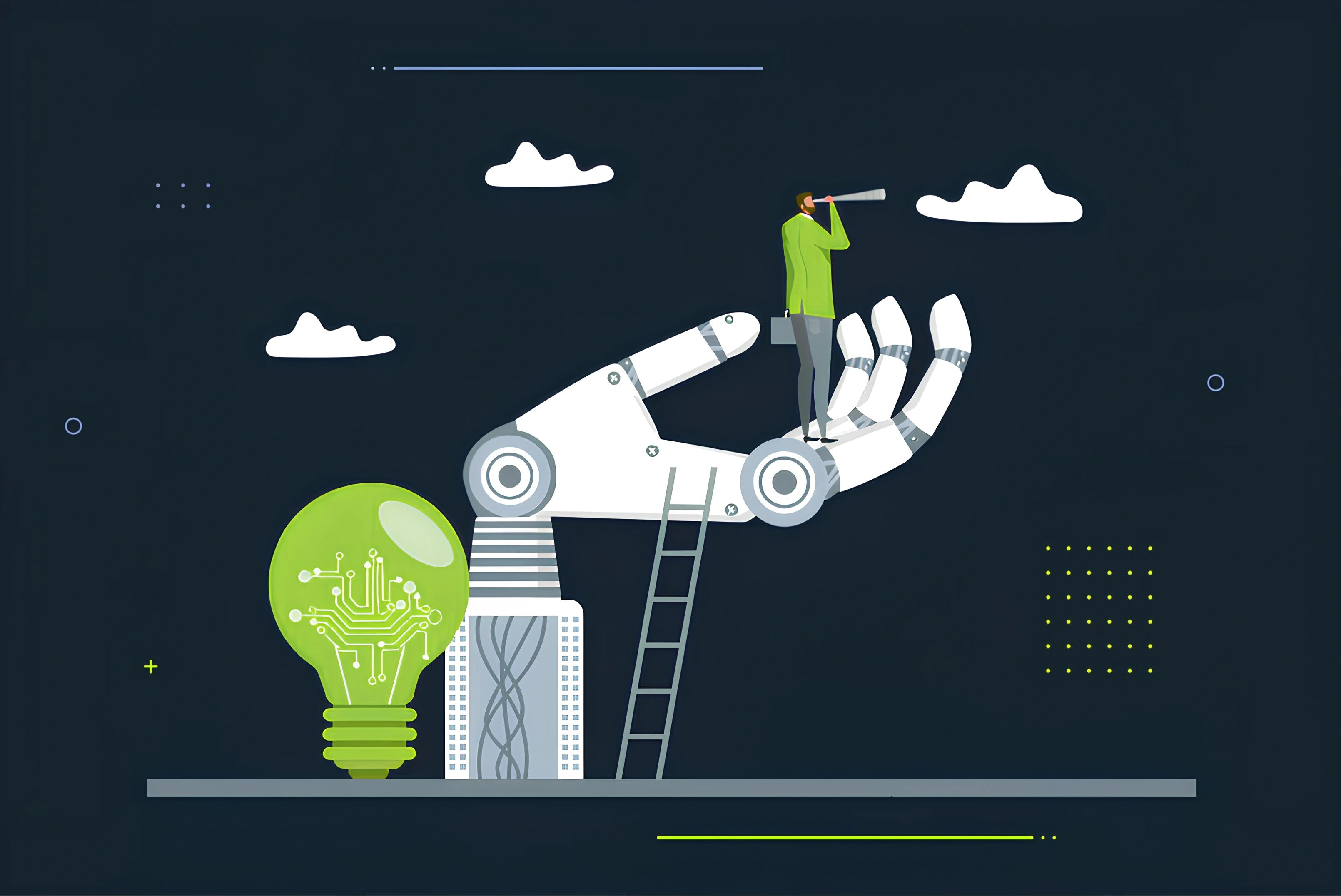
The future of venture investing is neither fully automated nor purely instinctive. It is collaborative - a dialogue between analytical systems and human conviction.
What This Means Going Forward
Artificial Intelligence is not turning venture capital into a mechanical process.
It is turning it into a more transparent one.
By accelerating analysis and exposing inconsistencies, AI forces clearer reasoning. Yet vision, timing, and belief in founders remain irreplaceable. The firms that benefit most are not those trying to automate judgment, but those willing to question their own assumptions with technology.
For tech founders preparing to engage with increasingly data-driven investors, the priority is not optimizing for algorithms. It is ensuring that product signals, metrics, and growth logic remain coherent under scrutiny. Teams like n1invest often work at this intersection - helping startups align analytical narratives with investor expectations before critical funding conversations begin.
In a landscape where both humans and machines evaluate your story, clarity becomes more than an advantage - it becomes a differentiator.